
Sheridan County Court Record Requests
Start on the access map. The 15th Judicial District records page lays out three levels for Sheridan County court records. The Kansas District Court Public Access Portal comes first. It covers public case information plus any linked electronic documents. The portal sometimes lacks an older document. The public terminal at the Sheridan County courthouse may still have it. Copies and certifications belong with the Sheridan County Clerk of the District Court. Files that need a review go there too. Note that the district clerk, not the administrative County Clerk, keeps these case files.
Online access is only one channel. You can visit the counter, call the court, or mail a written request. Kansas also offers a court-record KORA form. The district records page promises a response as soon as possible. That response comes no later than the end of the third business day. The first reply might acknowledge the request or ask for more detail. It could quote a cost or explain a delay.
- Confirm the case was filed in Sheridan County District Court, not a city court.
- Search the portal by case number or permitted name fields.
- Try the courthouse kiosk when an older public document is missing online.
- Call, visit, or write with the case number, date range, and exact document.
- Ask for an estimate and state whether an ordinary or certified copy is needed.
Three Sheridan Record Access Levels
These three levels are not the same view repeated. Kansas Rule 22 lets electronic access differ by channel. The portal offers basic information, an events index, and some document links. A courthouse terminal can add public converted documents that remote access leaves out. The clerk handles the rest. That means reviewing a precise request, applying restrictions, collecting approved fees, and certifying an eligible document.
| Channel | Best use | Limit |
|---|---|---|
| Public portal | Case details, events, available links | Not the complete official file |
| Courthouse kiosk | Public converted records | Requires courthouse access |
| District clerk | Copies, certification, access review | Fees or lawful limits apply |
Sheridan County joined Odyssey with the 15th Judicial District rollout on July 11, 2022. That date explains the split. A case may show online while its older documents wait at the kiosk or with the clerk.
Odyssey Gaps in Sheridan Records
The statewide technology change shapes how older Sheridan County court case records turn up. The 15th Judicial District joined the Enterprise Justice Odyssey rollout group on July 11, 2022. Kansas Judicial Branch guidance dated March 27, 2025 adds a key point: public documents converted from an earlier case-management system may sit at a courthouse terminal. Remote public access may show nothing. So a docket result with an events index but no document link calls for a kiosk or clerk check. It is not proof the document never existed.
Make the fallback efficient with details. Note the exact portal search. Include the county or court filter, case number, date searched, and the missing event. At the courthouse, ask whether the public converted item can be viewed at the terminal. Needing a copy? Give the same details to the district clerk and request an estimate. This works best for a public Sheridan County filing from before the local Odyssey transition. It also fits one with a document carried forward from the former system.
The technology gap does not change access law. A sealed or restricted document stays off limits through ordinary public channels. A converted public document may be different. It may just need a local terminal. The clerk can tell you which situation applies without revealing protected content.
Kinds of Court Records
A court docket is an index. The case file holds the documents themselves. A public Sheridan County file may include a complaint or petition, answer, motion, brief, affidavit, and service paper. It may also hold an order, journal entry, judgment, plea document, sentence, or notice of appeal. What appears depends on case type. It also depends on what the court accepted.
Handle special matters with care. Domestic, juvenile, guardianship, protection, adoption, expunged, and sealed cases all carry extra limits. Some documents or whole case types stay off remote access. A missing link does not prove a record never existed. Request the specific item. Do not ask for every record tied to a person.
- Public events index or docket history
- Identified pleading, motion, order, or judgment
- Ordinary or certified copy
- Historical converted document
- Transcript or audio routed separately
Sheridan Court Clerk, Not County Clerk
Two clerk offices serve Sheridan County. Their jobs differ. The Sheridan County Clerk runs elections and county administration. That office does not keep the district court docket. Court record requests go to the Sheridan County Clerk of the District Court. The current district clerks page lists "Mary" for clerk and "Talona" for deputy, both without surnames. The office title is the sound reference until the live listing is complete.
Sheridan County District Court
925 9th Street, P.O. Box 753
Hoxie, KS 67740
785-675-3451
Fax: 785-675-2256
Municipal files are separate. Hoxie and Selden municipal clerks keep ordinance and municipal traffic cases. An appeal may open a new district case, but the city record still stands.
Court Records: What They Contain
A known case number makes the best request. Kansas splits things into case information, the events index, and filed court records. Case information names the type, parties, attorneys, judge, and public hearing dates. The events index lists dated activity. Each document carries its own title, date, and access status.
| Case number | The court identifier; older and Odyssey-era forms differ. |
|---|---|
| Case information | Public type, parties, attorneys, judge, and dates. |
| Events index | Chronological filings, hearings, orders, and judgments. |
| Pleadings | Complaint, petition, answer, motion, brief, or affidavit. |
| Orders | Judicial action, disposition, sentence, or final decision. |
| Access status | Public, redacted, restricted, sealed, or not online. |
Never guess Sheridan's post-Odyssey prefix. The official guide gives formats from other counties but no verified Sheridan example. Copy the number exactly as shown on a notice, order, or result.
Sheridan Record Owners in View
The official Sheridan County staff directory sorts county and city contacts from the state district-court office.
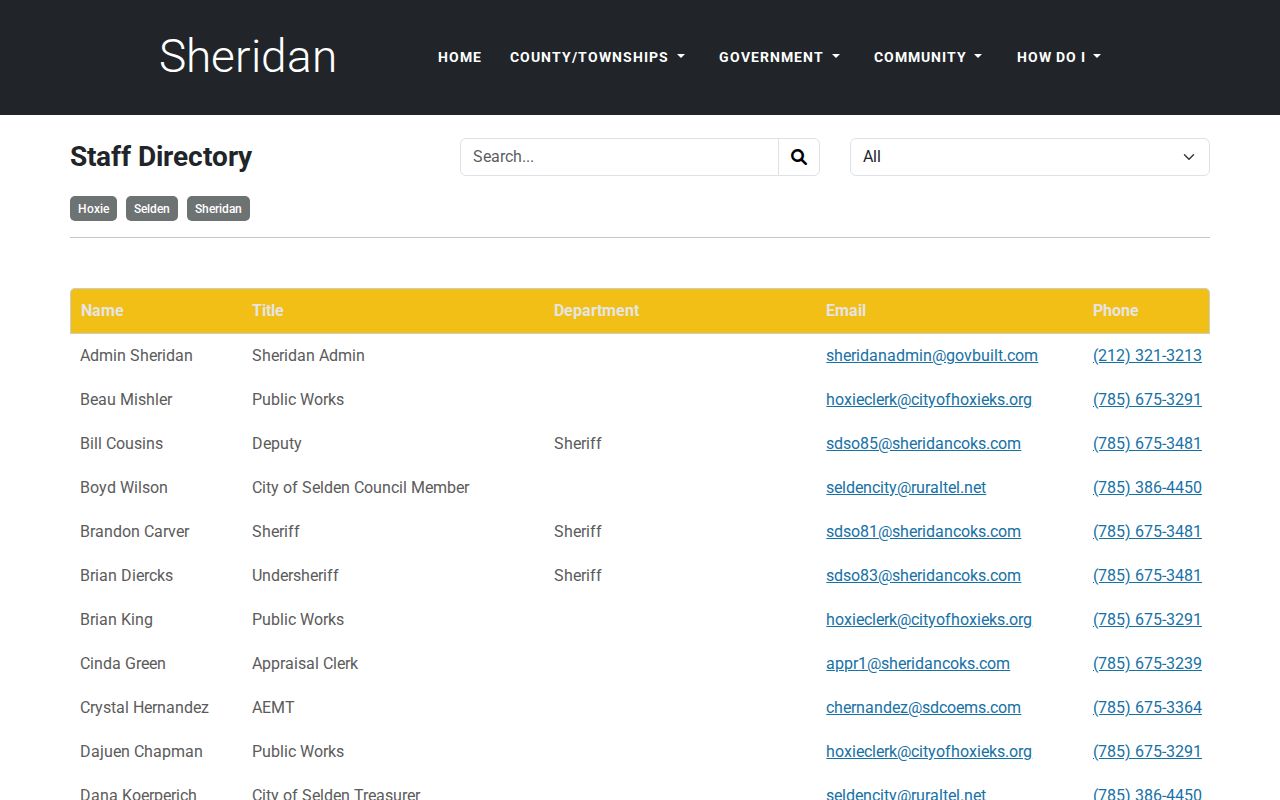
Think of the directory as a signpost, not a Sheridan County docket database. The filings themselves stay with the court that made them. For federal matters, CourtListener and RECAP provide a permitted, nonofficial route to some federal court records.
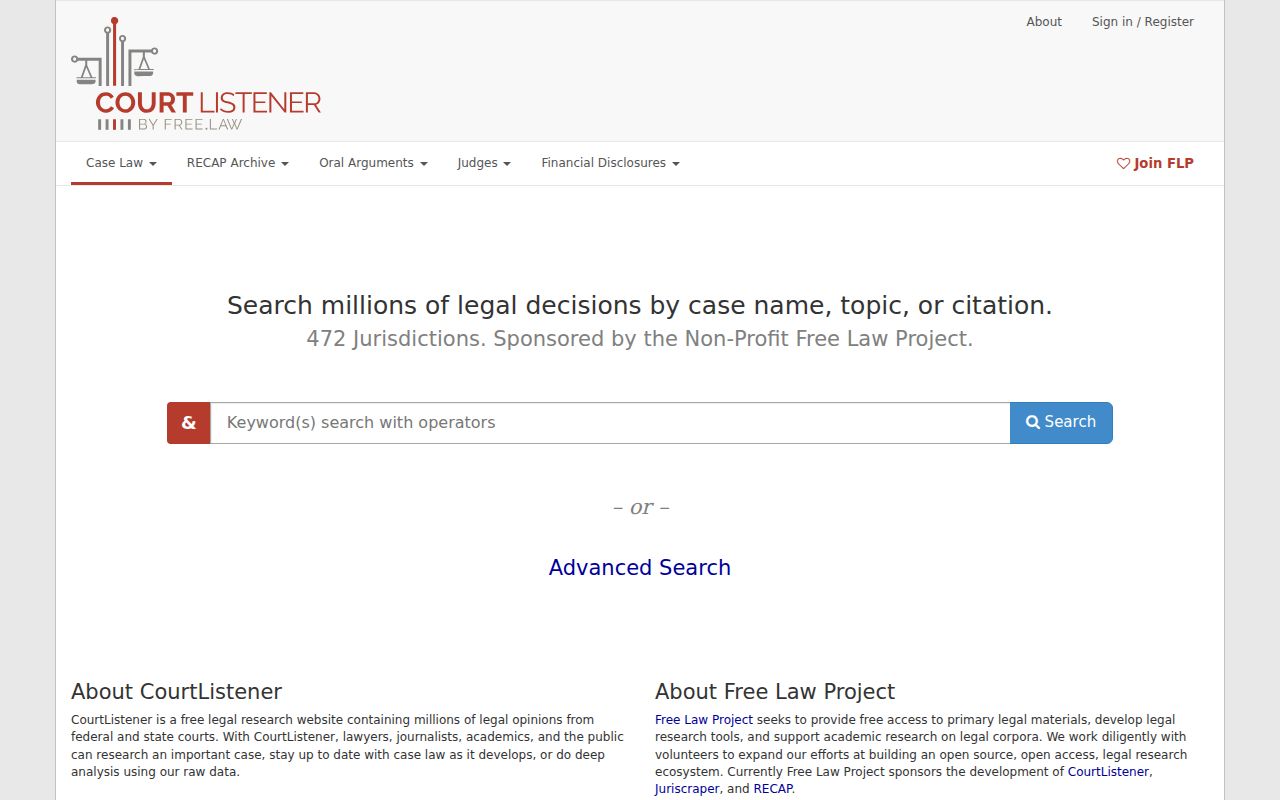
RECAP does not cover everything. It is no substitute for PACER, the federal clerk, or any Sheridan state-court channel.
Copy Fees and Certification
A plain copy just reproduces a public document from the file. A certified copy is different, because the district clerk authenticates it, and nothing printed from the portal carries that authentication. The 15th Judicial District lists the charges and expects payment before release, though mailing, fax, outside-provider, and staff fees can change the quote.
| Item | Listed amount |
|---|---|
| Ordinary copy | $0.25 per page |
| Certified document | $10 per document |
| Clerical or staff time | $20 per hour |
| Professional time | $60 per hour |
| Mail, fax, third party | Quoted charge |
| Transcript or audio | Fee not located |
When you ask for certification, name the exact judgment or order. Transcripts are different: they may need a court reporter at a separate rate, so never treat the per-page fee as a promised price.
Build a Precise Sheridan Record Request
The Kansas court-record form asks who is requesting, a clear description of the record, a delivery method, a signature, and the date. Give the clerk the county, court, case number, case type, filing period, and the exact event or document you need, plus whether certification matters. A narrow request lets the clerk find the right custodian and gauge the work.
Ask for: the named events index, order, judgment, or filed item and an estimate.
Do not send: Social Security numbers, full birth dates, children’s names, or protected addresses.
If absent: ask whether the matter is municipal, federal, converted, restricted, sealed, expunged, or filed elsewhere.
A Kansas Open Records Act request cannot override court rules or a sealing order. It also does not force staff to write a new legal summary.
State your delivery preference plainly. Say whether you want counter inspection, paper copies by mail, or an electronic copy. Let the clerk confirm what works for that item. For a long request, get an estimate first. The district records guidance allows copy, staff-time, mailing, fax, and outside-provider costs, so a broad ask can cost far more than one identified order.
Log the portal search date. Note the court filter, the name or case number you used, and the event title. That short record helps the clerk redo the search and catch a wrong county, wrong court, or older-system gap. If the clerk says another office holds the file, follow that routing rather than resending the same broad demand.
Access Rules for Court Records
Kansas court access works in layers. Rule 22 governs electronic access and restricted categories. Rule 123 handles protected identifiers, K.S.A. 45-221 lists Kansas Open Records Act exemptions, and K.S.A. 22-2410 controls expungement and non-disclosure. The clerk applies all of these alongside court orders and case law.
Key access authorities:
Kansas Supreme Court Rule 22 defines electronic access levels and restricted categories.
Kansas Supreme Court Rule 123 governs protected identifiers.
K.S.A. 45-221 states exemptions from disclosure.
"Not online" does not mean sealed. A public converted record may sit at the kiosk, and a restricted case may exist yet stay unavailable. Ask the custodian about access, redaction, or authorized-party steps.